Eligibility Verification – Dental


Dental Eligibility Verification: Why It Matters and How Our Virtual Assistant Can Help

Dental eligibility is the process of confirming a patient’s insurance coverage for a dental procedure, either before their scheduled appointment or when they arrive at the clinic. This verification step plays a critical role in the smooth functioning of any dental practice and directly impacts both patient satisfaction and revenue cycle management.

Why Dental Eligibility Verification is Important:

  1. Ensures Valid Insurance Coverage:
    Verifying dental eligibility helps confirm that the patient has active and valid insurance that will cover the treatment being proposed. This prevents scenarios where treatment is provided but insurance later denies the claim, leaving the patient and the practice in a difficult position.
  2. Confirms Procedure-Specific Coverage:
    Not all dental procedures are covered under every insurance plan. Eligibility checks help determine whether the specific treatment—such as a root canal, crown, or cleaning—is included in the patient’s policy. This allows the dentist and staff to make informed decisions and provide accurate cost estimates to the patient.
  3. Verifies Active Insurance Status:
    Insurance policies can lapse due to non-payment, changes in employment, or other factors. Confirming that the patient’s insurance is active and valid on the day of the procedure is essential to avoid claim denials and ensure timely reimbursement.
  4. Reduces Billing Errors and Delays:
    Accurate eligibility verification minimizes the risk of billing errors and delays in payment. It also reduces the need for rework or resubmission of claims, helping the practice maintain a healthy cash flow.
  5. Improves Patient Experience:
    When patients are informed about their coverage and potential out-of-pocket costs ahead of time, it leads to greater transparency and trust. This enhances the overall patient experience and improves satisfaction.

How Our Virtual Assistant (VA) Supports Your Practice:

Our trained Virtual Assistant takes care of the entire dental eligibility verification process on behalf of your practice. This includes:

  • Contacting insurance providers to gather up-to-date information.
  • Verifying the patient’s policy status, coverage limits, and benefits.
  • Checking whether the specific dental procedure is covered under the plan.
  • Communicating any coverage limitations, copays, or exclusions.
  • Promptly sharing the verified information with your front desk or billing team.

By delegating this task to our VA, your team can focus more on patient care while ensuring every appointment is backed by verified insurance coverage. This service not only streamlines your administrative workflow but also protects your revenue and enhances patient trust.

Medical Tourism


Medical tourism, has become a significant sector in India. The country is recognized for its high-quality, affordable healthcare services, making it an attractive destination for international patients. Here’s an overview of healthcare tourism to India:

Key Advantages of Healthcare Tourism in India:

  1. Cost-Effectiveness: Medical treatments in India are much cheaper compared to countries like the USA, UK, and other Western nations. For instance, surgeries, medical procedures, and consultations can cost up to 60-80% less than in developed countries.
  2. World-Class Healthcare Facilities: India boasts a wide array of internationally accredited hospitals and medical centers, many of which adhere to global standards. Cities like Delhi, Mumbai, Bengaluru, and Chennai are popular destinations for medical tourists, with hospitals equipped with the latest technology and highly skilled doctors.
  3. Skilled Medical Professionals: India has a vast pool of experienced doctors, surgeons, and specialists who have trained in renowned institutions globally. Many healthcare professionals in India are known for their expertise in fields like cardiac surgery, orthopedic surgery, cosmetic surgery, fertility treatments, and cancer care.
  4. Range of Treatments: India offers a wide range of medical services, including:
    • Cosmetic and Plastic Surgery
    • Orthopedic Treatments (joint replacements, spine surgeries)
    • Cardiac Surgeries (bypass, valve replacement)
    • Infertility Treatments (IVF)
    • Cancer Treatments (radiation therapy, chemotherapy)
    • Ayurvedic Treatments and Alternative Medicine (traditional healing therapies)
    • Dental Care (cosmetic dentistry, implants, etc.)
  5. No Waiting Time: Unlike many developed nations where patients often face long waiting times for treatment, India offers quick access to healthcare services, allowing tourists to get treated without unnecessary delays.
  6. Medical Visa: India provides a Medical Visa (M-visa) to international patients, making the process of traveling for medical treatment more streamlined.
  7. Tourism Opportunities: Patients and their families can also explore India’s rich culture, heritage, and tourist attractions while undergoing treatment, making the experience more enjoyable.

Popular Cities for Healthcare Tourism in India:

  • Delhi: Known for its world-class hospitals and specialized treatment centers.
  • Mumbai: A hub for medical tourism, offering advanced treatment options.
  • Bengaluru: Famous for its healthcare infrastructure, particularly in IT and biotech-related healthcare.
  • Chennai: A leading destination for specialized treatments like cardiac surgery and orthopedics.
  • Hyderabad: Known for medical excellence in various specialties.

Common Challenges:

  • Language Barrier: Although English is widely spoken, some medical tourists may face language barriers in certain regions.
  • Post-Treatment Care: Ensuring follow-up care once back home can be tricky, so many patients prefer staying in India longer for recovery.

Conclusion:

India is a top choice for healthcare tourism due to its combination of high-quality medical services, affordability, and the ability to receive treatment in a short time. It continues to be an attractive destination for patients seeking both modern and traditional healthcare solutions.

If you’re considering healthcare tourism to India, it’s crucial to research hospitals and medical professionals, compare prices, and plan your travel and accommodation accordingly.

Breathing Exercise Conductive environment


Creating a conducive environment for breathing exercises can enhance your mindfulness practice. Here are some tips for setting up the best place in your house:

  1. Quiet Space: Choose a location that is free from distractions and noise. This could be a corner of your bedroom, a dedicated meditation room, or even a quiet spot in your living room.
  2. Comfortable Seating: Ensure you have a comfortable place to sit or lie down. This could be a cushion, yoga mat, or a comfortable chair. The key is to maintain a posture that allows you to breathe deeply and comfortably.
  3. Natural Light: If possible, select a space with natural light. Sunlight can create a calming atmosphere and help you feel more connected to nature.
  4. Fresh Air: Good ventilation is important. If weather permits, open a window to let in fresh air. This can enhance your breathing exercises and make the experience more refreshing.
  5. Minimal Clutter: Keep the area tidy and free from clutter. A clean, organized space can help reduce distractions and promote a sense of calm.
  6. Aromatherapy: Consider using essential oils or incense to create a soothing environment. Scents like lavender, chamomile, or eucalyptus can help you relax and focus.
  7. Soft Lighting: If natural light isn’t available, use soft, warm lighting. Avoid harsh, bright lights that can be distracting.
  8. Personal Touches: Add elements that make you feel comfortable and relaxed, such as plants, calming artwork, or a small water fountain.
  9. Sound: If you find it helpful, play soft, calming music or nature sounds. This can create a peaceful ambiance and help you stay focused on your breathing.
  10. Consistency: Try to use the same space regularly for your breathing exercises. This can help create a routine and make it easier to slip into a mindful state.

Would you like any specific recommendations for setting up your space?

Mindful walking – Mindfulness


Mindful walking is a wonderful way to incorporate mindfulness into your daily routine. Here’s how you can practice it:

  1. Choose a Path: Find a quiet place where you can walk without many distractions. It could be a park, a quiet street, or even your backyard.
  2. Start Slowly: Begin walking at a slow, comfortable pace. Focus on the sensation of your feet touching the ground.
  3. Pay Attention to Your Body: Notice the movement of your legs, the shifting of your weight, and the rhythm of your steps. Feel the connection between your feet and the earth.
  4. Engage Your Senses: Observe your surroundings. Notice the colors, shapes, and textures around you. Listen to the sounds, whether it’s birds chirping, leaves rustling, or distant traffic. Take in the smells of nature or the air around you.
  5. Focus on Your Breath: Pay attention to your breathing. Notice how it syncs with your steps. You can try coordinating your breath with your steps, such as inhaling for three steps and exhaling for three steps.
  6. Stay Present: If your mind starts to wander, gently bring your focus back to the present moment. Use the sensations of walking and your surroundings to anchor your attention.
  7. Be Non-Judgmental: Accept whatever thoughts or feelings arise without judgment. Simply observe them and let them pass, returning your focus to your walking.
  8. End with Gratitude: As you finish your walk, take a moment to express gratitude for the experience. Appreciate the time you took for yourself and the connection you felt with your surroundings.

Mindful walking can be a refreshing way to clear your mind and connect with the present moment. Would you like to try this on your next walk?

Mindfulness


Mindfulness is the practice of being fully present and engaged in the current moment, without judgment. It involves paying attention to your thoughts, feelings, and sensations in a non-reactive way. By focusing on the present, mindfulness helps reduce stress, improve emotional regulation, and enhance overall well-being.

Mindfulness Techniques 

  1. Breathing Exercises: Focus on your breath. Inhale deeply through your nose, hold for a few seconds, and exhale slowly through your mouth. Repeat this process, paying attention to the sensation of breathing.
  2. Body Scan: Lie down or sit comfortably and close your eyes. Slowly bring your attention to different parts of your body, starting from your toes and moving up to your head. Notice any sensations, tension, or discomfort without trying to change anything.
  3. Mindful Walking: Take a walk and pay attention to the sensation of your feet touching the ground, the movement of your legs, and the rhythm of your breath. Notice the sights, sounds, and smells around you.
  4. Mindful Eating: Eat a meal or snack slowly, paying full attention to the taste, texture, and aroma of your food. Notice how your body feels as you eat and savor each bite.
  5. Loving-Kindness Meditation: Sit comfortably and close your eyes. Silently repeat phrases like “May I be happy, may I be healthy, may I be safe.” Then extend these wishes to others, including loved ones, acquaintances, and even people you find challenging.
  6. Gratitude Journaling: Write down three things you are grateful for each day. Reflect on the positive aspects of your life and the people who bring you joy.
  7. Mindful Listening: When talking to someone, give them your full attention. Listen to their words, tone, and body language without planning your response. This practice can improve your relationships and communication skills.
  8. Guided Meditation: Use apps or online resources to follow guided mindfulness meditations. These can provide structure and support as you develop your practice.

Which of these techniques would you like to try first?

Breathing Exercise – Mindfulness


Breathing exercises are a fundamental part of mindfulness practice. Here are a few techniques you can try:

  1. Deep Breathing:
    • Sit or lie down in a comfortable position.
    • Close your eyes and take a deep breath in through your nose, filling your lungs completely.
    • Hold the breath for a few seconds.
    • Slowly exhale through your mouth, letting go of any tension.
    • Repeat this process for a few minutes, focusing on the sensation of your breath.
  2. 4-7-8 Breathing:
    • Inhale quietly through your nose for a count of 4.
    • Hold your breath for a count of 7.
    • Exhale completely through your mouth for a count of 8.
    • Repeat this cycle three to four times.
  3. Box Breathing:
    • Inhale through your nose for a count of 4.
    • Hold your breath for a count of 4.
    • Exhale through your mouth for a count of 4.
    • Hold your breath again for a count of 4.
    • Repeat this cycle for several minutes.
  4. Alternate Nostril Breathing:
    • Sit comfortably and close your right nostril with your right thumb.
    • Inhale deeply through your left nostril.
    • Close your left nostril with your right ring finger and release your right nostril.
    • Exhale through your right nostril.
    • Inhale through your right nostril, then close it and exhale through your left nostril.
    • Continue this pattern for a few minutes.
  5. Counting Breaths:
    • Sit comfortably and close your eyes.
    • Take a deep breath in and count “one” in your mind.
    • Exhale and count “two.”
    • Continue counting each breath up to ten, then start over.
    • If your mind wanders, gently bring your focus back to your breath and the counting.

These exercises can help you relax, reduce stress, and improve your focus. Which one would you like to try first?

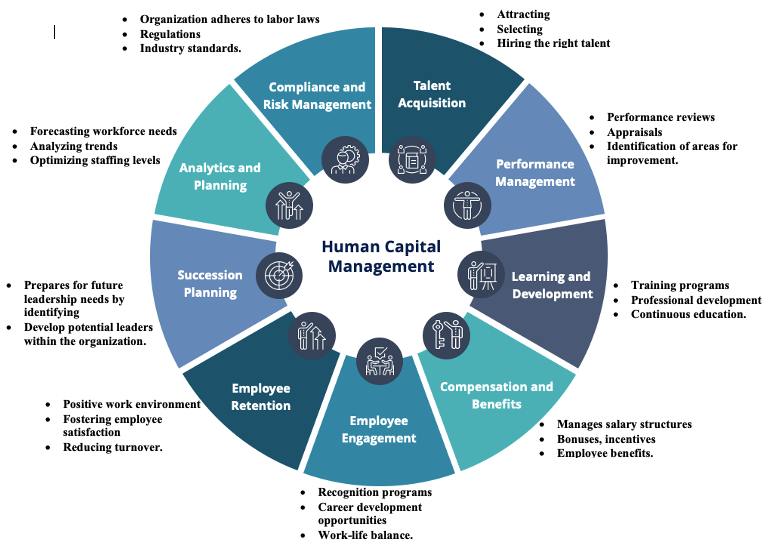
Human Capital Management


Importance of HCM

Enhanced Productivity: By investing in employee development and aligning their skills with organizational goals, companies can boost overall productivity.

Employee Satisfaction and Retention: HCM practices foster a positive work environment, leading to higher job satisfaction and lower turnover rates.

Strategic Alignment: HCM helps ensure that the workforce is aligned with the company’s strategic objectives, driving long-term success.

Competitive Advantage: Organizations with strong HCM practices are better equipped to attract and retain top talent, giving them a competitive edge in the market.

Resilience Building


Resilience is the ability to adapt and recover from adversity, stress, or challenging situations. It involves maintaining mental, emotional, and physical well-being despite difficulties. Resilient individuals can bounce back from setbacks, learn from experiences, and continue moving forward with a positive outlook.

Absolutely, building resilience is crucial in today’s digital age. Here are some positive coping strategies to help develop resilience in virtual environments:

  1. Set Boundaries: Establish clear limits on your screen time and stick to them. This helps prevent burnout and maintains a healthy balance between online and offline activities.
  2. Stay Connected: Maintain strong relationships with friends and family. Having a support system can provide emotional stability and a sense of belonging.
  3. Practice Mindfulness: Engage in mindfulness exercises like meditation or deep breathing. These practices can help you stay grounded and manage stress effectively.
  4. Develop Healthy Habits: Regular exercise, a balanced diet, and adequate sleep are essential for overall well-being and can enhance your ability to cope with stress.
  5. Seek Positive Content: Surround yourself with positive and uplifting content. Follow accounts and join communities that inspire and motivate you.
  6. Learn and Adapt: Embrace challenges as opportunities to learn and grow. Developing a growth mindset can help you adapt to new situations and overcome obstacles.
  7. Take Breaks: Regularly disconnect from virtual environments to recharge. Spend time outdoors, engage in hobbies, or simply relax without screens.
  8. Seek Professional Help: If you find it difficult to cope, don’t hesitate to seek help from a mental health professional. They can provide guidance and support tailored to your needs.

Do any of these strategies resonate with you?

Virtual World Anxiety – Resilience


Building resilience is essential for navigating the challenges and uncertainties of virtual environments like gaming and social media. Here are some positive coping strategies to help develop resilience:

1. Practice Self-Compassion

Tip: Be kind to yourself, especially during setbacks or failures. Example: Instead of criticizing yourself for a mistake, acknowledge that everyone makes mistakes and focus on what you can learn from the experience.

2. Develop a Growth Mindset

Tip: Embrace challenges as opportunities for growth rather than threats. Example: View failures in a game or negative feedback on social media as chances to improve and learn new skills.

3. Build a Support Network

Tip: Surround yourself with supportive friends, family, and mentors. Example: Share your experiences and challenges with trusted individuals who can offer encouragement and advice.

4. Focus on What You Can Control

Tip: Concentrate on actions and decisions within your control, rather than external factors. Example: In gaming, focus on improving your skills and strategies rather than the outcome of each game. On social media, create content that reflects your values and interests, regardless of the number of likes or comments.

5. Practice Mindfulness and Relaxation Techniques

Tip: Incorporate mindfulness practices to manage stress and stay grounded. Example: Engage in activities like meditation, deep breathing exercises, or yoga to reduce anxiety and enhance emotional regulation.

6. Set Realistic Expectations

Tip: Avoid setting unrealistic goals that can lead to disappointment and frustration. Example: Instead of aiming for perfection, set achievable goals that allow for gradual progress and celebrate small victories along the way.

7. Learn from Setbacks

Tip: Reflect on setbacks and use them as learning experiences. Example: After a disappointing outcome in a game or social media post, analyze what went wrong and how you can improve next time.

8. Maintain a Healthy Lifestyle

Tip: Prioritize physical health to support mental resilience. Example: Ensure you get enough sleep, eat a balanced diet, and engage in regular physical activity to boost your overall well-being.

Benefits of Building Resilience

  • Enhanced Coping Skills: Resilience helps you handle stress and adversity more effectively.
  • Improved Mental Health: Developing resilience can reduce anxiety and depression, leading to better emotional well-being.
  • Greater Adaptability: Resilient individuals are better equipped to adapt to changes and challenges in virtual environments.
  • Increased Confidence: Building resilience boosts self-confidence and empowers you to face difficulties with a positive attitude.

By incorporating these strategies into your daily routine, you can build resilience and better manage the ups and downs of virtual environments. This will not only improve your mental health but also enhance your overall quality of life. Which of these strategies do you think would be most helpful for you?

Virtual World Anxiety – Realistic Goals


Setting realistic and achievable long-term goals is a powerful way to shift focus from the instant gratification often found in gaming and social media to sustained progress and personal growth. Here are some strategies to help with this:

1. Define Clear Objectives

Tip: Start by identifying what you want to achieve in the long term. Be specific about your goals. Example: Instead of saying, “I want to be successful,” define what success looks like for you. For instance, “I want to become a senior software engineer at a leading tech company within the next five years.”

2. Break Down Goals into Smaller Steps

Tip: Divide your long-term goals into smaller, manageable tasks. Example: If your goal is to become a senior software engineer, break it down into steps like:

  • Complete advanced coding courses.
  • Gain experience through internships or projects.
  • Network with industry professionals.
  • Apply for relevant job positions.

3. Set SMART Goals

Tip: Ensure your goals are Specific, Measurable, Achievable, Relevant, and Time-bound (SMART). Example: “I will complete three advanced coding courses and build two personal projects within the next six months.”

4. Track Your Progress

Tip: Regularly monitor your progress to stay motivated and make adjustments as needed. Example: Use a journal, planner, or digital tools like Trello or Asana to track your milestones and celebrate small victories along the way.

5. Stay Flexible

Tip: Be open to adjusting your goals as circumstances change. Example: If you encounter unexpected challenges, reassess your plan and make necessary changes without losing sight of your ultimate objective.

6. Seek Support and Accountability

Tip: Share your goals with friends, family, or mentors who can provide support and hold you accountable. Example: Join a study group, find a mentor in your field, or participate in online communities related to your goals.

Benefits of Setting Realistic Goals

  • Increased Motivation: Achieving smaller milestones keeps you motivated and focused on your long-term objectives.
  • Better Time Management: Breaking down goals helps you manage your time more effectively and prioritize tasks.
  • Reduced Stress: Having a clear plan reduces the anxiety associated with uncertainty and helps you stay on track.
  • Sense of Accomplishment: Regularly achieving smaller goals boosts your confidence and reinforces your commitment to your long-term vision.

By setting realistic and achievable goals, you can create a roadmap for success that balances short-term actions with long-term aspirations. This approach not only helps in reducing anxiety but also fosters a sense of purpose and direction. What long-term goal are you currently working towards?