Human Capital Management


Importance of HCM

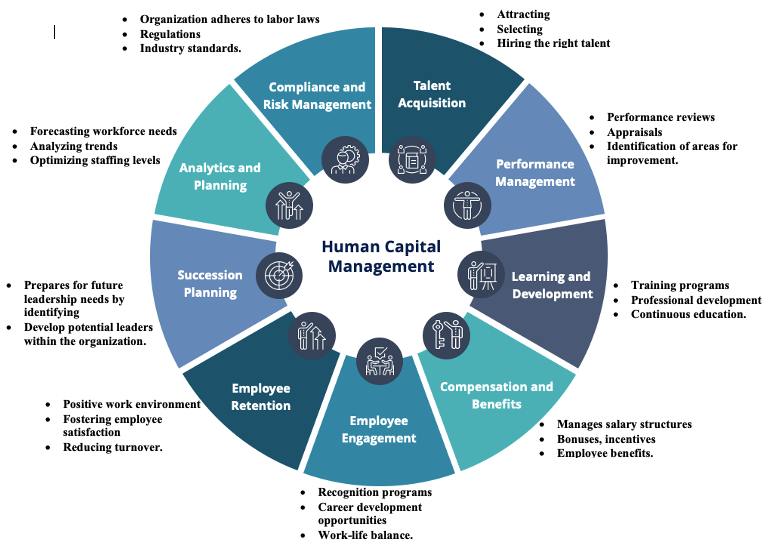
Enhanced Productivity: By investing in employee development and aligning their skills with organizational goals, companies can boost overall productivity.

Employee Satisfaction and Retention: HCM practices foster a positive work environment, leading to higher job satisfaction and lower turnover rates.

Strategic Alignment: HCM helps ensure that the workforce is aligned with the company’s strategic objectives, driving long-term success.

Competitive Advantage: Organizations with strong HCM practices are better equipped to attract and retain top talent, giving them a competitive edge in the market.
Managers and OCD


I always wonder if Managers end up suffering from Obsessive Compulsive Disorder. It becomes a routine for a good manager to have the best around them to make sure the work or project they are involved the outcome to be the best. Keeping “perfection” as a routine from the time they wake up till they get home at one point ends up as a habit and normal behavior.

Now the question will be if a Manager with signs of OCD could be a perfect pick for a project? Sometimes it is hard to work for a perfectionist so the team formation might struggle but once formed I think it would be a good team.

Characters Influence


“Can personal character of a leader influence the way they could guide a Team or a Company or a State or a Country?”

A person who,

  • Gets offended very fast and reacts fast .
  • Stood by a person just to maintain her/his status in politics even though it was clear who this person was standing by did  a big mistake.
  • Makes up small stories to gain attention from people.
  • Is a “I-Person” doesn’t like to share his/her success credit with people who worked around.
  • Listens to all to decide.
  • Does not listen to anyone to decide.

Each of the above has a character inbuilt and will it affect their way they could lead?

Now the hard part would be what is acceptable and what is not acceptable in a leader?

“I” replacing “We”


A good leader is one who shares his/her success with his team and not take it to himself/ herself.

There is a point of time which would tempt a leader to use “I” instead of sharing the credit with the whole team who stood beside and took part in the ups and downs.

It is equally important on how a leader takes care of his/her team during the journey let it be the time of hardship or at the point of success.

“I” replacing “We” could affect the team work to an extent the members of the team might get dislocated or even in some case get lost as they feel not recognized.

“I” could make a leader himself/herself feel highly self confident sometimes that they start using it a lot.

  1. Is “I” better than “We”?
  2. Is an “I” leader worth anything without a strong team around?
  3. When and how often could a Leader use “I”?


Share this:

Challenge on Management level


Everyday we gain knowledge either by learning or by doing a mistake. No one is 100% perfect in what they do and hence never feel inferior when asked to lead a team. Management guys are good in running a team and the team which deals in a special department would be good in what they do.  It is how smart you are in learning fast and take over the position you are supposed to take care of which would need lot of homework. A discouraged person would never be able to lead a team as his inferiority complex would start overruling his ability to learn and at one point the team below him would sense it and which would ruin the whole team.